What is Art psychotherapy?
Many people find that there are experiences, feelings, or memories that are simply too complex for words alone. Art Psychotherapy offers a different way to communicate.
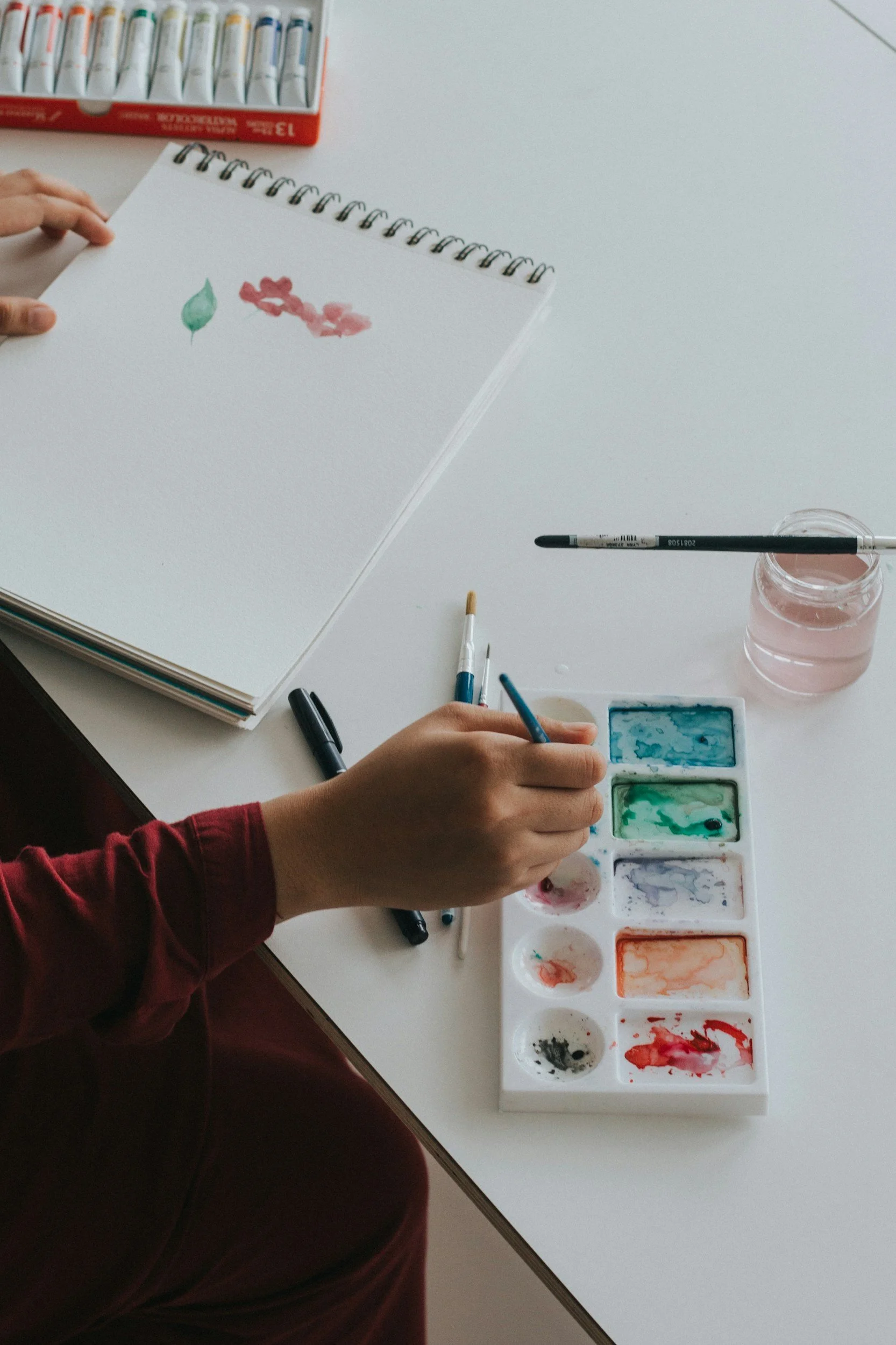
It is a form of psychological therapy that uses art-making as its primary mode of expression. In our sessions, the art becomes a "third person" in the room; a safe space where we can externalize what is happening internally, look at it together, and begin to make sense of it.
Do I need to be "good" at art?
This is the most common question I hear! The answer is a firm no.
Art Psychotherapy is about the process, not the final product. You don't need any previous experience or "artistic skill." Whether you are doodling, splashing paint, or working with clay, the goal is expression, not aesthetics. There is no "right" or "wrong" way to create at Works of Heart.
Learn More: For a deeper look at the profession and its evidence base, you can visit the British Association of Art Therapists (BAAT), the professional body for art therapists in the UK.
You can also read about what a typical art therapy session might look like below, or book a consulation with me to discuss any questions you have further:
What to expect
Starting therapy is a significant step, and it's completely natural to feel a bit nervous. Here is a small roadmap of what our first 50 minutes together will look like:
Arriving & Settling In: We will begin with a brief check-in. If we are meeting in person at the studio, I’ll show you where the materials are kept. If we are online, we’ll ensure your space feels private and comfortable.
Exploring Your Goals: We will talk a little more about what has brought you to therapy at this time and what you hope to move toward. This helps us build a shared understanding of our work together.
Meeting the Materials: I usually invite you to engage with the materials in a low-pressure way. This might be as simple as picking up a charcoal stick or choosing a color that reflects how you feel in the moment.
Reflecting Together: Toward the end of the session, we will spend a few minutes looking at anything you’ve created. We don't "interpret" the art; instead, we wonder about it together, noticing what surfaced during the process.
Closing: We’ll discuss how the session felt for you and decide on our next steps.